
+49 2161 9173807
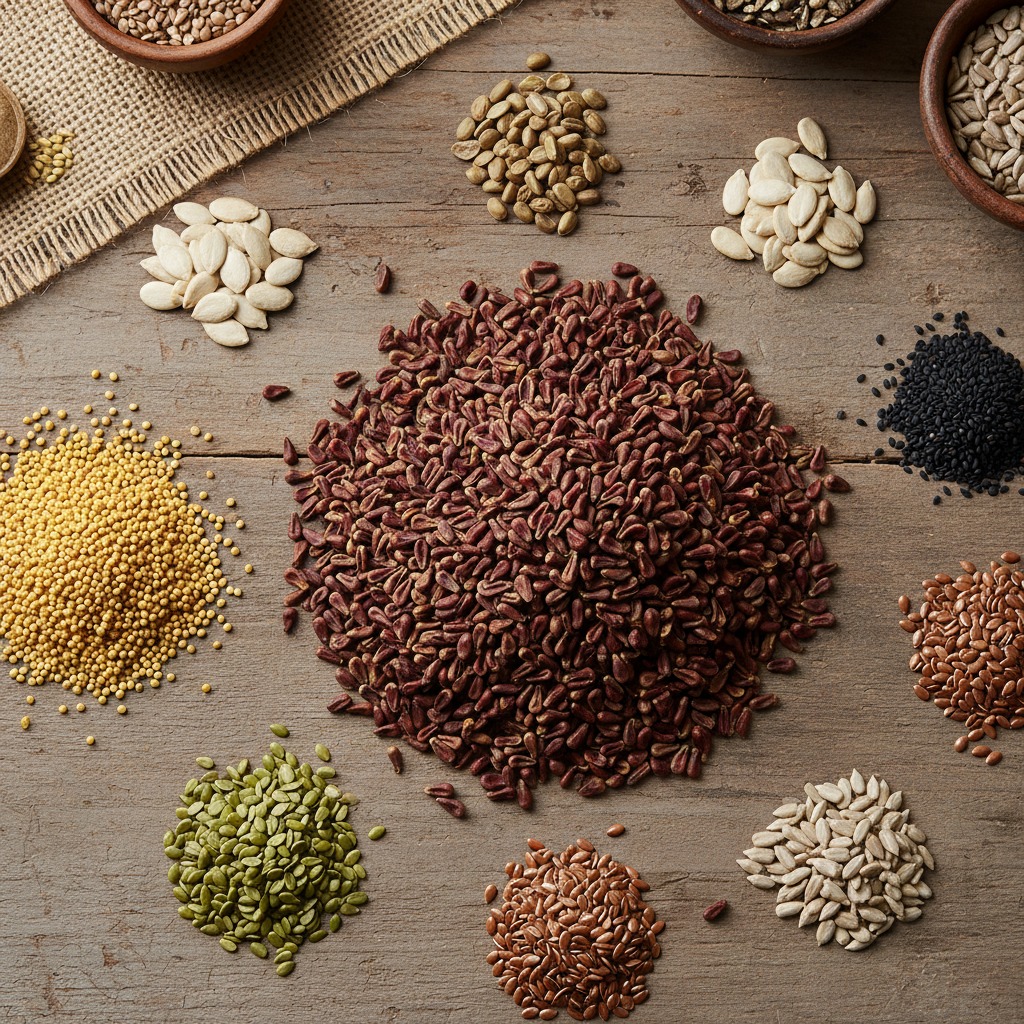
seeds

From Experts for Experts
Your knowledge makes this guide better. All information is provided without guarantee.
Those who press oil every day know things no datasheet reveals: How does hemp behave at 90 % humidity? When does pre-warming palm kernels really pay off?
You are the experts in oil production. We are the specialists for the machines behind it. This list is our joint work – and it grows with your experience.
✍️
Do you have experience with a particular seed, an optimal cylinder diameter or a special pressing temperature? Write to us – we are happy to include your practical experience.
Spindle Types & Cylinder
R6
Small Press
Dedicated small cylinder (Oleo P 8 only)
For compact models – not compatible with the standard large cylinder.
R8
Hard Seeds
Standard large cylinder
Narrower pitch, high pressing pressure. For hard, dry seeds. From Oleo P 10.
R11
Soft Seeds
Standard large cylinder
Wider pitch, gentle pressing. For sensitive, moist or soft seeds. From Oleo P 10.
Important: R8 and R11 do not differ in their outer dimension (exception: R6) – they differ in the screw geometry and thus in the pressing pressure generated. If you have questions about the right spindle for your model, contact us directly.
All 58 Seeds – The Complete Table
Showing all 58 seeds
R8 High pressure / hard seeds
R11 Gentle / soft seeds
R6 Small press only (Oleo P 8)
All machine models
From Oleo P 10
🌡️ Cold <40°C · Medium 40–60°C · Warm >60°C
| Seed | Spindle | Cylinder | Machine | Oil content | Temp. | Practical note | |
|---|---|---|---|---|---|---|---|
| ★ Most Pressed Seeds | |||||||
| 🌿 | Rapssaat | R8 | Ø 37 mm | All models | 40–44% |
45–55°C | Most common seed – high wear, check spindle regularly |
| 🌻 | Sonnenblumenkerne | R8 | Ø 37 mm | All models | 42–48% |
45–60°C | Husks increase abrasion – check more often than rapeseed |
| 🌾 | Leinsamen | R11 | Ø 37 mm | All models | 35–45% |
35–45°C | Mucilaginous when pressing – R11 prevents blockages |
| 🌿 | Hanfsamen | R11 | Ø 37 mm | All models | 28–35% |
30–40°C | Omega-3 very heat-sensitive – max. 40°C strictly observed |
| 🎃 | Kürbiskerne | R11 | Ø 37 mm | From P 10 | 43–52% |
35–50°C | R8 generates too much heat – chlorophyll and aroma suffers |
| 🌰 | Walnuss | R11 | Ø 37 mm | All models | 60–70% |
30–40°C | Moist kernels – press raw, no heat; very sensitive |
| 🌰 | Haselnuss | R11 | Ø 37 mm | All models | 60–65% |
35–50°C | Shell or roughly break beforehand – more even yield |
| 🫘 | Mandeln | R11 | Ø 37 mm | All models | 48–56% |
35–50°C | Prefer shelled almonds – more even yield |
| 🌱 | Senf | R8 | Ø 37 mm | All models | 26–32% |
40–55°C | Small grain – good cylinder seal important |
| 🌾 | Sesam | R8 | Ø 37 mm | All models | 45–55% |
40–55°C | Roast beforehand for more intense aroma and higher yield |
| 🌑 | Schwarzkümmel | R8 | Ø 37 mm | All models | 30–38% |
35–45°C | Valuable ingredients – keep temperature low |
| 🌸 | Mohn | R11 | Ø 37 mm | All models | 40–50% |
35–48°C | Very small grain – slow speed, even feeding |
| 🌼 | Leindotter | R11 | Ø 37 mm | All models | 33–42% |
35–45°C | Like linseed – heat-sensitive omega-3 fatty acids |
| 🌰 Nuts & Fruit Kernels | |||||||
| 🥜 | Cashewkerne | R11 | Ø 37 mm | From P 10 | 42–48% |
35–48°C | Always use shelled kernels |
| 🥜 | Erdnuss | R8 | Ø 37 mm | From P 10 | 44–52% |
45–60°C | Remove shells, lightly roast for better yield |
| 🌰 | Makadamianuss | R11 | Ø 37 mm | From P 10 | 68–76% |
35–48°C | Very high oil content – slow speed recommended |
| 🥑 | Avocadokerne | R11 | Ø 37 mm | From P 10 | 12–18% |
40–55°C | Low oil content – dry and crush before pressing |
| 🍑 | Aprikosenkerne | R11 | Ø 37 mm | From P 10 | 40–50% |
35–50°C | Cold press preferred – bitter compounds increase with heat |
| 🍒 | Kirschkerne | R11 | Ø 37 mm | From P 10 | 20–28% |
35–48°C | Break shell before pressing – very hard hull |
| 🌍 Exotic & Special Seeds | |||||||
| 🌳 | Baobab | R11 | Ø 37 mm | From P 10 | 30–38% |
35–48°C | Remove shells – hard casing must not be pressed |
| 🌿 | Argan | R11 | Ø 37 mm | From P 10 | 48–56% |
35–50°C | Premium quality – use pre-shelled kernels |
| 🌱 | Moringa | R11 | Ø 37 mm | From P 10 | 35–42% |
30–42°C | Remove shells – very heat-sensitive nutrients |
| 🌵 | Kaktusfeige | R11 | Ø 37 mm | From P 10 | 5–12% |
30–40°C | Very low oil content – slow speed required |
| ⭐ | Sacha Inchi | R11 | Ø 37 mm | From P 10 | 48–56% |
35–48°C | Rich in omega-3 – max. 48°C always |
| 🟠 | Sanddorn | R11 | Ø 37 mm | From P 10 | 3–8% |
30–40°C | Press kernels (not fruit) – very low yield normal |
| 🌿 | Neem | R11 | Ø 37 mm | From P 10 | 38–46% |
40–55°C | ⚠️ Technical/industrial use only – not for food |
| 🌿 | Jatropha | R11 | Ø 37 mm | From P 10 | 33–40% |
45–60°C | ⚠️ Bioenergy only – toxic, not for food |
| 🌵 | Jojoba | R11 | Ø 37 mm | From P 10 | 50–60% |
35–48°C | Liquid wax, not a classic oil – cosmetics/industry |
| 🌸 | Kamelie | R11 | Ø 37 mm | From P 10 | 30–38% |
35–48°C | Premium quality – very low temperature |
| 🌴 | Palmkerne | R11 | Ø 37 mm | From P 10 | 45–55% |
55–70°C | Remove shells – pre-warming recommended |
| 🌳 | Shea | R11 | Ø 37 mm | From P 10 | 43–50% |
50–65°C | Solid at room temperature – pre-warm to 50°C |
| 🌻 | Nigersaat | R11 | Ø 37 mm | From P 10 | 35–42% |
40–52°C | Small grain – good cylinder seal, slow speed |
| 🫐 Berry Seeds & Fruit Kernels | |||||||
| 🍇 | Weintraubenkerne | R8 | Ø 37 mm | From P 10 | 12–16% |
45–60°C | Very hard – plan for short service intervals |
| 🫐 | Granatapfelkerne | R11 | Ø 37 mm | From P 10 | 10–15% |
30–42°C | Dry before pressing – low yield is normal |
| 🫐 | Himbeerkerne | R11 | Ø 37 mm | From P 10 | 15–22% |
30–40°C | Very heat-sensitive – always cold press |
| 🍓 | Erdbeerkerne | R11 | Ø 37 mm | From P 10 | 22–28% |
30–40°C | Dry seeds well – moisture reduces yield |
| 🫐 | Johannisbeerkerne | R11 | Ø 37 mm | From P 10 | 14–20% |
30–40°C | Rich in GLA – always cold |
| 🫐 | Holunderbeerkerne | R11 | Ø 37 mm | From P 10 | 18–24% |
30–42°C | Dry well before pressing |
| 🌹 | Hagebuttenkerne | R11 | Ø 37 mm | From P 10 | 12–18% |
30–40°C | Very valuable oil – press slowly and cold |
| 🍈 | Melonenkerne | R11 | Ø 37 mm | From P 10 | 24–30% |
35–48°C | Dry well – moist seeds block the screw |
| 🍋 | Zitronenkerne | R11 | Ø 37 mm | From P 10 | 28–35% |
35–45°C | Dry and peel – intense aroma at low temperature |
| 🌾 Cereals, Legumes & Oil Herbs | |||||||
| 🫘 | Soja | R8 | Ø 37 mm | From P 10 | 16–22% |
55–70°C | Pre-warming to 60–70°C significantly increases yield |
| 🌽 | Maiskeim | R8 | Ø 37 mm | From P 10 | 33–42% |
45–60°C | Moisture varies greatly – drying before pressing recommended |
| 🌸 | Lupinen | R11 | Ø 37 mm | From P 10 | 8–14% |
45–58°C | Mainly protein use; remove shells |
| 🌾 | Amarant | R11 | Ø 37 mm | From P 10 | 5–8% |
35–45°C | Low oil content – squalene oil niche |
| 🌿 | Bockshornklee | R11 | Ø 37 mm | From P 10 | 5–10% |
35–48°C | Very aromatic – low yield but intense oil |
| 🌿 | Koriander | R11 | Ø 37 mm | From P 10 | 14–22% |
35–48°C | Intense aroma – slow speed for quality |
| 💙 | Borretsch | R11 | Ø 37 mm | From P 10 | 22–30% |
30–42°C | Rich in GLA – very temperature-sensitive |
| 🌙 | Nachtkerze | R11 | Ø 37 mm | From P 10 | 20–26% |
30–40°C | GLA quality oil – slow speed |
| 🌸 | Färberdistel | R8 | Ø 37 mm | From P 10 | 28–38% |
40–55°C | Hard husk – R8 optimal; peel for higher yield |
| 🌸 | Mariendistel | R11 | Ø 37 mm | From P 10 | 20–28% |
35–48°C | Silymarin – cold press for medicinal quality |
| 🌴 Coconut, Cocoa & more | |||||||
| 🥥 | Kokosflocken | R11 | Ø 37 mm | From P 10 | 60–70% |
40–55°C | Dried flakes (copra) – very high oil content |
| 🍫 | Kakaobohnen | R11 | Ø 37 mm | From P 10 | 48–55% |
40–55°C | Roasted and shelled – yields cocoa butter |
| ☕ | Kaffeebohnen | R11 | Ø 37 mm | From P 10 | 12–18% |
45–60°C | Roast, grind, then press – low yield |
| ⚫ | Chia | R11 | Ø 37 mm | From P 10 | 28–36% |
30–40°C | Small, mucilaginous grain – slow speed essential |
| ☁️ | Baumwollsamen | R8 | Ø 37 mm | From P 10 | 18–26% |
55–70°C | ⚠️ Gossypol removal needed – technical/industrial only |
| 🦗 Insects & New Protein Seeds | |||||||
| 🦗 | Grillen | R11 | Ø 37 mm | From P 10 | 12–18% |
35–48°C | Freeze-dried and ground – novel food application |
| 🪲 | Soldatenfliegenlarven | R11 | Ø 37 mm | From P 10 | 28–36% |
40–55°C | Dried and ground – high lauric acid like coconut |
This table is continuously updated. Do you have more precise values from your practice? Write to us – we are happy to include your experience.
Golden rule: When in doubt between R8 and R11, always start with R11 and increase the speed. Too much temperature irreversibly destroys nutrients – too little pressure can usually be compensated by adjusting speed.
Not sure which spindle fits?
Personal advice – free and without obligation.
Get advice now All spare parts